
Mostar in 24 hours: a one-day guide
A detailed itinerary from sunrise to midnight - from riverside coffee, through museums and a side trip, to sunset panoramas and a dinner reservation.
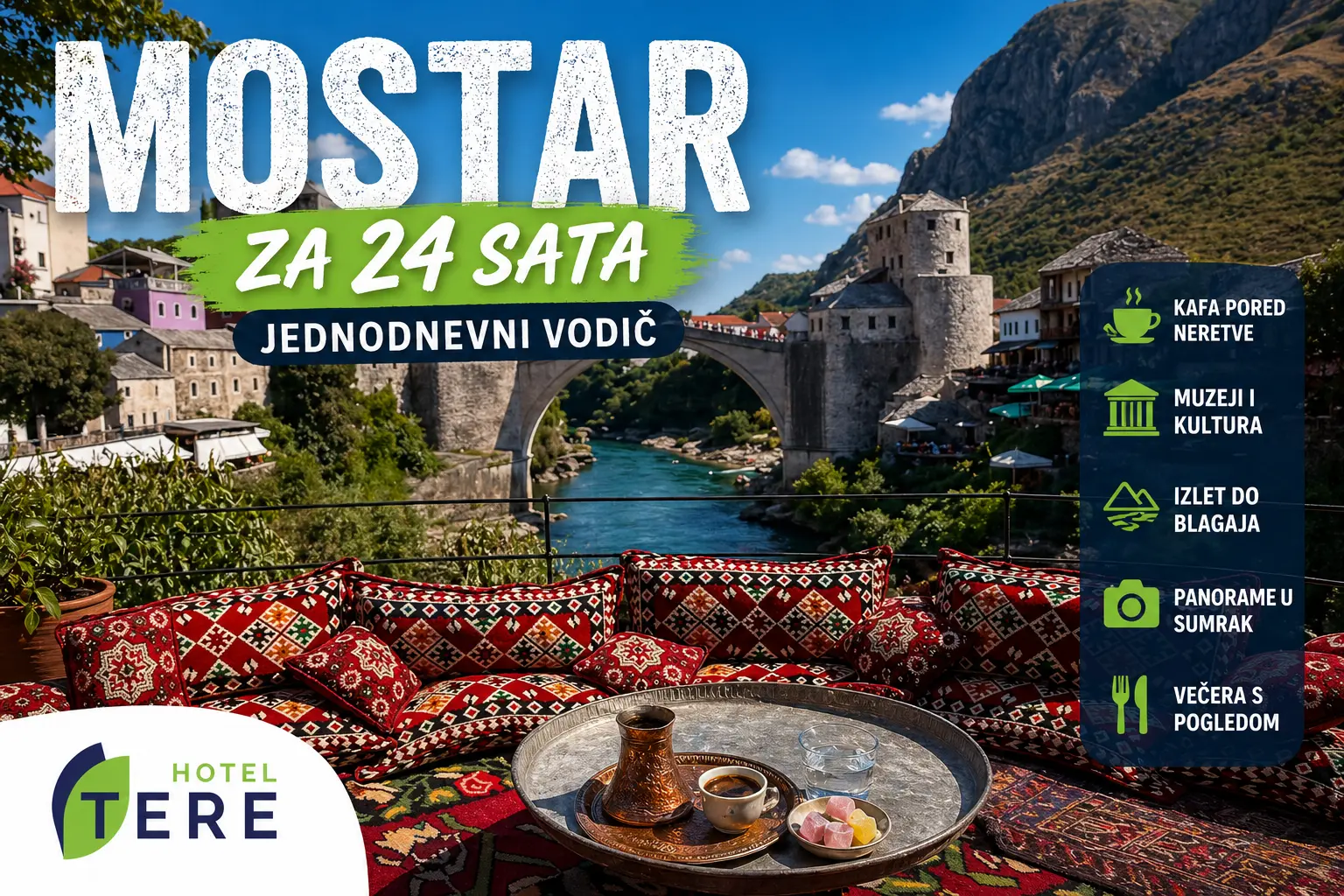
Before you set out
Mostar is a city best experienced on foot. Wear comfortable shoes with rubber soles - the cobblestones in the old bazaar are smooth and can be slippery, especially after rain. In summer, water, a hat and sunscreen are essential; the Herzegovinian sun can be merciless.
Most sights open between 8 and 9 in the morning and close between 6 and 8 in the evening. Restaurants begin lunch service around 11:30, and dinner is usually served from 18:00 onwards. The local currency is the convertible mark (BAM); cards are accepted in most hospitality venues.
The day we propose is planned with Hotel Tere as the starting point. Every route can be walked, and the side trip to Blagaj is offered as an afternoon option.
07:30 - breakfast and departure
Hotel breakfast starts early, which gives you an edge over most tourists who don't move before 10. Use it - the streets are quiet, the light is soft, and crowd-free photographs are nearly impossible later in the day.
Before leaving, grab a bottle of water, your camera and a light layer. Mornings in the Neretva canyon can be cool even in the summer months.
08:00 - Kujundžiluk in silence
Head down Maršala Tita street toward the old bazaar. At this hour the craftsmen are just opening their shops - copper is being polished, the bakery is taking out the first morning rolls, and the morning ezan still hangs in the air over the mosques.
The Old Bridge in morning light looks completely different from midday. The Neretva, colder than the air, sends up a thin mist that makes the bridge appear almost weightless. This is the best moment of the day for photographs from the western bank.
09:00 - coffee by the Neretva
The terrace gardens below the bridge open early. Order a Bosnian coffee - served in a copper džezva with a cube of rahat lokum and a glass of cold water. The ritual is slow and part of the culture: first a sip of water, then careful pouring so the grounds stay in the džezva, and the coffee meets the rahat lokum on your tongue.
This is a good moment to check the map and confirm your plan for the day. If you've changed your mind about Blagaj, ring a taxi or ask reception to arrange transport for the afternoon.
10:00 - Karađoz-bey Mosque and the view from the minaret
Walk back north through Kujundžiluk and step into the Karađoz-bey Mosque, the most important Ottoman religious building in Mostar, dating from 1557. The interior is decorated with original painted ornaments, partly restored after war damage.
For a small fee you can climb the minaret - narrow, spiral steps lead to a tight balcony with one of the best panoramic views over the city, the Old Bridge and the surrounding mountains. The climb is not advised for anyone with claustrophobia or a fear of heights.
11:30 - Museum of Herzegovina or the Muslibegović House
By midday the heat is at its peak, so it is the ideal moment for indoor spaces. The Museum of Herzegovina is housed in the former home of Džemal Bijedić and tells the region's story from prehistory to the modern era.
An alternative is the Muslibegović House - a preserved Ottoman town house from the 17th century, today a small museum and boutique hotel. It offers a window into the daily life of a wealthy Mostar family, with original furniture, rugs and copperware.
13:00 - lunch in the old bazaar
A traditional Mostar lunch features ćevapi, pljeskavica, dolma or japrak, served with ajvar, kajmak and somun bread. Vegetarian options include zeljanica, sirnica and stuffed peppers. Portions are generous - order one and share, especially if an afternoon trip is ahead.
For a lighter meal, look for restaurants offering Caprese salad, a local cold platter (cheese, cured meats) or trout from the Buna. For dessert, tufahija is a must - a poached apple stuffed with walnuts in syrup with sugar and cloves.
14:30 - the choice: trip or rest
You have two scenarios. First: a short trip to Blagaj and the source of the Buna, 15 kilometres to the south-east. A taxi takes around 20 minutes; a visit to the tekke and lunch (if you haven't already eaten) takes about two and a half hours.
Second scenario: rest by the Neretva. Find a sunbed in one of the gardens below the bridge, order a cold drink, and watch the bridge divers - a tradition more than 450 years old, today managed by the local 'Mostari' club. Jumps take place when enough donations have been collected.
17:30 - return and a break
After the trip or the riverside, head back to the hotel for a short break. Change clothes, take a shower, and prepare for the evening walk. A shower after a Herzegovinian summer day is one of the most underrated pleasures of travel.
19:00 - sunset on Spanski trg and the western riverbank
Set out along the western side of the river toward Spanski trg - a wide, modern square with a fountain and a view of the rebuilt Mostar buildings. The square takes its name from the Spanish UN battalion stationed there during the 1990s.
Sunset is when the Old Bridge is lit by floodlights from both banks. Walking upstream toward the bridge, watch the colour of the stone shift from warm beige to gold, and then to a bluish hue after the sun has set.
20:30 - dinner with a view
The restaurants on the western side of the Old Bridge often have terraces facing the river. Classic dinners include lamb under the sač (a few hours' notice required), trout from the Buna or Vrelo Bune, and seasonal vegetables from Herzegovinian farms.
Local wine cellars produce excellent varieties: Žilavka (white) and Blatina (red). Most restaurants stock wines from the Čitluk, Ljubuški and Stolac regions. Reservations are recommended in season, especially for tables along the railing with a view.
22:30 - back to the hotel and Mostar at night
The walk back through the lit-up bazaar is, for many guests, the favourite part of the day. Most souvenir shops are still open, the live-music kafanas run late, and the temperature is ideal for a stroll.
If you still have energy, drop into a kafana with traditional sevdalinkas - melancholic Bosnian love songs accompanied by saz or accordion. The atmosphere is intimate and requires no knowledge of the language.
Practical tips for a one-day visit
Tap water in Mostar is drinkable and high quality - save yourself the cost of plastic bottles. One refillable bottle is enough.
If your time is short (you arrive in the afternoon and leave in the morning), we recommend a condensed version: morning or evening for the Old Bridge and Kujundžiluk, one meal in the bazaar, and one shorter visit (the Karađoz-bey Mosque or the Museum of Herzegovina).
During public holidays and tourism fairs (spring and autumn) the city is busier and restaurants fuller - booking ahead saves time.
Have a question? Our reception is happy to help with tips and arrival logistics.
Contact us